MOIRAJO
  • Weekly Devotionals
  • Weekly Message
  • Sermon Podcasts
  • Links
  • Contact

Lent 5: Come Out!

3/29/2023

0 Comments

 
Picture
​Ezek. 37:1-14; John 11:1-45

 
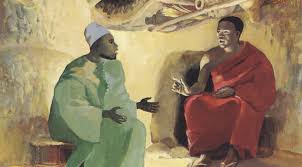
      For the past several weeks in March the gospel of John has taken us through some very lengthy and profound conversations focused on having faith in Jesus.  It started with Nicodemus, then it went on to the Samaritan woman at the well. Last week we witnessed the fracas with the Jewish leaders over the healing of a blind beggar. Today’s reading takes on a different tone altogether. It now becomes deeply intimate.  Jesus beloved friends, Mary and Martha, call Jesus urgently to come to the beside of Lazarus, telling him “the one who you love is ill.”  

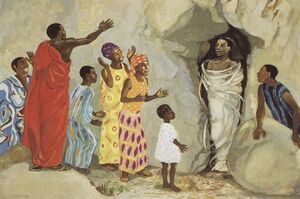
     The mood is somber.  The disciples are aware that there are plots to kill Jesus, so they are worried about him returning to Judea.  In the midst of this Jesus inexplicably delays going to Bethany, where Lazarus is dying. The worst happens. Lazarus dies and is in his tomb four days by the time Jesus arrives.  The people are weeping and wailing.   Martha cries out, “Lord if you had been here, my brother would not have died.”  Mary too, kneels before him and also says, “Lord, if you have been here my brother would not have died.” The sisters are weeping, the crowds are weeping and Jesus is deeply agitated and profoundly moved.  As Jesus approaches the tomb he too breaks down and cries. 

       John speaks of love three times in this chapter.  It is because of love that this wound of loss is so deep and profound.  Most of us have grieved the death of a loved one.  It changes us, doesn’t it?  It leaves a hole in our heart that never closes. We learn to move on with life, but life is never the same.   Some of us may even feel like Mary and Martha:  Lord why have you delayed?  Why didn’t you do something?  Why Lord have you allowed this to happen?  Who hasn’t prayed like this in anguish?  Jesus may know that this was to reveal God’s glory, but that doesn’t make the sting any easier to bear.  Jesus bears the pain as well, as he is about to perform one of his greatest signs of all: the raising of Lazarus.  A raising that surely is a harbinger of things to come for Jesus himself on Easter Sunday.

      Jesus’ manner of raising Lazarus from the dead gives us insight in how we too, how our world, can be brought back to life.  What we must do to testify that Jesus is the Resurrection and the Life.   Jesus lays it out: how we are to come out of the mess we find ourselves in.  How we are to be unbound by all that ensnares us in life.  Let us look at this remarkable passage more closely and learn from Jesus how we need to go about changing our lives, how we are to help others find resurrected life, especially as we approach the end of Lent and enter Holy Week.

      Weeping and with deep distress, Jesus approaches the tomb. Lazarus has been dead four days. In the common thinking of the era, the spirit has left the body by the third day.  By the fourth day the funeral begins to wind down.  The body is entombed.  It is decaying.  Death is final. What can Jesus do at this point?  It seems pointless. Yet the first thing Jesus does is command “take away the stone.”

     Jesus is first and foremost a stone remover.  Especially stones that traps our life in tombs - the abode of death. All the hurt, mistakes, bad choices and pain we deal with in life places us in tombs and we can’t get out on our own. Yet Jesus stands before our tombs, broken-hearted, feels our pain, and orders the stone rolled away. A stone represents the barrier between death and life.  A stone is an obstacle that gets in the way.  Stones block our life from moving forward. Whether it’s a person standing in  our way or a situation we find ourselves in or our own bad habits. Stones are real. Jesus is there to take it away.  However, notice that Jesus here doesn’t order the stone to move.  He has others do this task.  Jesus calls us as believers to engage in the ministry of rolling away stones and clearing the path, so that others can come to Jesus when he calls. Therefore, we too, like Jesus are stone movers.  Sometimes however, removing the stones around us seems impossible.

       There’s story told of how God told a man to go outside his cabin and push on a huge rock that was in front of his cabin. Every day for many years he would go out early in the morning and push on the rock. After all these years he never moved the rock an inch and he became discouraged because he wanted to serve God in an awesome way, but all he had done was wasted his time pushing on a rock. The man decided to go to a nearby town and talk to a minister about his trouble. As he was walking to the town, he had to pass a mine. As he got close to the mine, he could see something happening and he ran to see what was happening. Several people were trapped when a huge rock fell from the roof of the mine. They had tried to move it failed. The man found the rock and with one huge push the rock gave way and the men rushed to freedom. The man had saved all of their lives and were thankful. He never made it to town. That night as he was praying God spoke to him and said I never asked you to move the rock in front of your cabin only to push. Because you have done what I asked you had the strength to do what I created you to do.  So, friends, our Lenten lesson is keep pushing.  You never know what stones you push, what testimony you give, what help you render, will move a stone out of the life of a neighbor, a loved one, or a stranger. Keep moving those stones so resurrected life can emerge.

     As Jesus stands before the tomb he prays. “Father, I thank you for having heard me.”  Jesus prays publicly for all to hear - The prayer is not just for Lazarus but for those who are present, so that they might come to believe in Jesus, through whom God works this mighty deed. Jesus could have just performed the miracle without a prayer. Jesus deliberately prays out loud for the benefit of others. So, we pray for many things in life, but we are called to remember that prayer is another type of stone mover.  There is private prayer and public prayer.  Both are important. Public prayer changes us. Public Prayer changes others.  Public prayer gives glory to God and creates space for resurrected life to emerge. So be bold. Let others hear your prayers.

     After praying Jesus cried out in a loud voice (remember Jesus also did this from the cross), Lazarus come out!  Jesus commands Lazarus back to life.  The word in Greek is interesting.  The word deuro, means “to come.” It’s not the regular word Jesus uses when he talks with his disciples (erchomai).  Jesu uses deuro in Matthew, Luke and Mark as he talks to a wealthy man who comes to Jesus seeking eternal life. Jesus responds: “You lack one thing — go, sell whatever you have and give the money to the poor; then you will have treasure in heaven. And come, (deuro) follow me.”  Jesus is summoning the wealthy man to come out of his grave created by his money and live (Matt. 19:21; Luke 18:22, Mk 10:21).

      Deuro, as it is used in the NT, describes a deliberate action to follow and obey the will of God, to walk in the footsteps of Jesus.  So, Jesus is giving a command to Lazarus: his coming out of the grave is in fulfillment with God’s will.  It is God’s will that we come out of our graves.  So, from what grave are you being summoned?  The stone is rolled away. Prayers have been uttered. Now it’s time for you, for us, to act. To leave the tomb.

        Jesus’ next command is for the people to unbind the risen Lazarus from stripes of cloth binding his hands and feet and wrapped around his head.  Note that Lazarus needs help taking off the remnants of his grave clothes, and we need help too. Pastor Eric Geiger notes: “Some remnants of our old selves must be taken off in community. It takes others to encourage you when you are struggling. It takes others to pray for you when you need wisdom. It takes others to graciously help you see grave clothes that you can’t see, remnants of your old life that remain. It takes a village to raise a child and it takes community to mature a Christian.”

.       The apostle Paul puts it this way in Ephesians 4:22-24: “You were taught with regard to your former way of life, to put off your old self, which is being corrupted by its deceitful desires… and to put on the new self, created to be like God in true righteousness and holiness.” We are commanded to take off our grave clothes, to “put off our old selves.”   It’s not enough to come out of tombs, stinking of death. To rid ourselves of the stench we must clothe ourselves in Christ.   Paul goes on to tell us how to unbind each other:” you must clothe yourselves with tenderhearted mercy, kindness, humility, gentleness, and patience. Make allowance for each other’s faults and forgive anyone who offends you” (Col 3:12-14).

     This miracle of restored life was not just for Lazarus and his sisters, it is for us this day. This deeply personal story is our personal story as well. There are many ways we die in this world.  The death of our physical body is just the final act we must face.   We die in other ways.  We die as relationships go sour or end.  We die when innocence is taken away.  We die as we numb ourselves with alcohol or drugs. We die as we face the great transitions in life and as the burdens of life wear us down, dreams fade, we find we can’t make the changes we once committed ourselves to.  We die when we compromise our values.  We die when injustice reigns supreme in our world.  We die with every unkindness, insult and mean-spirited action comes our way.  We die as we watch those we love, people, pets or creation, suffer and pass away.  We feel like Ezekiel’s valley of dry bones, we are surrounded by death in all its shades and shapes.   This is where our understanding of Jesus as our Resurrection and life come into focus.  So, as we prepare for Holy Week and Easter; let us be about the ministry of removing stones that block the love of God.  Let us pray like Jesus for the glory of God to be manifested in our midst. Let us unbind the grave clothes that cling to us and clothe ourselves with the ways of Christ.  Let us hear Jesus calling to us as we face Holy Week:

Come out! Come out of anxiety and insecurities that have you bound.
Come out! Come out of pain and fears that have you entombed in darkness.
Come out!  Come out of sorrows and all negativity that clings to you like a shroud.
​
     Come out.  Come out and claim your identity as a beloved child of God.  Step out into the fresh air, shake the stink of falsehood and sin off, and claim Jesus as Martha did: Jesus our Messiah, the Child of God, the one coming into the world. Be clothed in Christ and follow him into the glory of a risen life, a resurrected life, that he has promised for all who trust in him.


https://pastorsings.com/2014/04/06/dead-man-walking-sermon-on-john-111-45/
https://ericgeiger.com/2019/05/grave-clothes-and-the-importance-of-community/
https://www.smithsonianmag.com/science-nature/how-heart-hardens-biologically-
180961163/#:~:text=But%20the%20heart%20can%20also,the%20tissues%20of%20the%20heart.
https://christswords.com/main/content/greek-word-translated-come-new-testament-erchomai
https://ericgeiger.com/2019/05/grave-clothes-and-the-importance-of-community/#:~:text=It%20takes%20others%20to%20graciously,walk%20in%20our%20new%20selves.
0 Comments

Lent 4: Believers' Blindness

3/22/2023

0 Comments

 
Picture


​1 Samuel 16:1-13 , John 9:1-41

        There is great truth in the saying, “things are not always what they seem to be.”   Remember the optical illusion we shared in “Not for Children Only?”  Depending on the angle you looked at the picture we see either 3 or 4 bars. Now look at the optical illusion under the sermon title in the bulletin.  What do you see?  How many first saw a duck?  How many first saw a rabbit?  Can you see both? It all depends on how we shift our vision.  There is more than meets the eye. We have to be trained to see what lies beneath the surface.  (NOTE: you can see these optical illusions by going a google search as well).

Sight is a very complex process, the brain is wired in such a way that is able not just see objects, but how to interpret light, understand depth perception, sort out color, and compare these objects with images in our brain’s memory banks. We learn to see through experience.  Dr. Pawan Sinha, a neuroscientist at MIT, describes a video in which a teen-age boy, blind since birth because of opaque cataracts, sees for the first time. The boy sits still and blinks silently, trying to comprehend what he is seeing. Sinha believes these first moments for the newly sighted are blurry, incoherent, and saturated by brightness—like walking into daylight with dilated pupils—and swirls of colors that do not make sense as shapes or faces or any kind of object.  As American educator Steven Covey astutely observes: “We see the world not as it is but as we are as we are conditioned to see it.”  If we are conditioned to see the world as a frightening place, then it is scary.  If we are conditioned to see the world only through a materialistic lens, then we will only see opportunities to exploit and get.  If we are conditioned to see the world through the eyes of God, then we will see the miraculous, the impossible, the beauty, the majesty of the divine at our fingertips.  Look at the ability of animals and other organisms to camouflage themselves and blend in with nature.   The predator sees a stick, not an insect. We see danger, God sees potential.  God sees sin where perhaps we just note the routine, ordinary habits of life.  Because we see the world as we are conditioned to, not as it really is.

There’s a parallel process between our natural sight and spiritual sight, how we perceive the world through our inward eye.  Our inward eye is guided by God’s vision.  However, because of conditioning, we fail to use our inward eye. We can believe in God, know his commandments, but still be guided by worldly sight, completely unconnected to that inward eye inspired by God. God tells Ezekiel that his people "have eyes to see but do not see, and ears to hear but do not hear" (Ezekiel 12:2).  Jesus speaks of this phenomenon in Matthew … ‘You will be ever hearing but never understanding; you will be ever seeing but never perceiving” (Matthew 13:14-16).  Seeing is at the surface level. Perceiving is spiritual sight that sees beyond physical sight to the workings of the hand of God.

          Throughout the bible there are multitude of believers who have a condition known as Believers Blindness.  Their spiritual wiring is off. Their memories how to see deviate from God’s vision. Their conditioning is narrow-minded. They only see the rabbit, or only the duck. They believe but see in a worldly way not a Godly way.  It is a dangerous condition for religious people to have.  We assume our way, most of the time the worldly way, of seeing is sanctioned by God.  The can’t be further from the truth.

In our Old Testament lesson, the prophet Samuel thinks the Lord’s anointed is among the handsomest, tallest and oldest of Jesse’s sons.  But God says no and tells Samuel: “God does not see the same way people see. People look at the outside of a person, but the Lord looks at the heart.”  Jesse brings forth son after son, seven in total. but God said no.  It wasn’t until the youngest, the one out tending the sheep is called for, does God give his approval. Thus, Samuel anoints David as king.  Samuel went from seeing in a worldly to fortunately open to obeying God and shifting his vision to a spiritual way. 

        In our lesson from John, Jesus encounters the blindness of the disciples and the Pharisees. The chapter opens as Jesus and his disciples walk by a blind beggar, “Teacher, they inquire, “who sinned that this man was born blind? A question rooted in the religious conditioning of the disciples: it was a common belief that illness was the result of sin.   Jesus confronts this spiritual blindness.  Through this man, Jesus says the work of God will be manifested, seen, revealed.  Jesus restores sight to the blind man, and the drama unfolds in such a way that we discover that sin and blindness are indeed related. The sin and blindness of the Pharisees are made manifest as they cruelly interrogate the blind man twice, then question his parents, fight with Jesus, and then excommunicate the healed man as he boldly places his trust in Jesus.       
  
Through the blind man, we learn what it really means to see.  The work of God, the passage reveals to us, is for us to confront the blindness in ourselves all the while God offers to us the gift of inward sight, through faith in Jesus.


In the Old Testament, being blind is one of the many metaphors used to describe the condition when people do not live as faithfully as God required.  The problem of such Believers Blindness is that the faithful display an inability to see things in a new or different way, to see God’s redemptive activity is always unfolding in our midst. Just last week we heard the story of the people of Israel, just freed from slavery, quarreling and fighting in the wilderness. They blamed Moses for leading them out into the wilderness to die, despite the fact that God had just liberated them from servitude.   They were conditioned as slaves, and because of this, they lacked the faith in God to provide water for them. The prophet Isaiah speaks to this problem: “I am doing a new thing, now it springs forth, do you not perceive it?” (Isaiah 43:19).  Our religious conditioning often makes it difficult if not impossible to see God’s handiwork around us. God wants to move us forward, but all we see is what we know:  the same, old solutions to how church should be and what worked in the past. All we see are the buildings and grounds. All we see are the once great choirs, filled sanctuaries, different fellowship groups that were popular.  The problem is, looking back to what we are conditioned to see makes it almost impossible to catch of whiff of God’s vision for the future. The Aymara people of South America have an interesting feature in their language.  The Aymara have the same word for "front" and "past," and another word that means both "future" and "behind."  This is because, in Aymara thinking, what we see clearly in front of us is the past. It is the future, which we cannot see, that is behind us, which of course we can’t see because we don’t have eyes on the back of our head.  Get it?  That’s the spiritual dilemma we face.

Because of this, it is critical for us to grasp that we can believe, but at the same time be spiritually blind. Many believe in the existence of God without a relationship to God that transforms them inside and out. We lack the ability to see God working in our midst, because it is often different to what we are accustomed to seeing. We can’t identify it. It is only apparent with faith.

This is characterized by the Pharisees treatment of the blind man in our story.  Isn’t it interesting that the miracle itself is not initially what annoys the Pharisees?  The man with the restored sight is brought to them, but instead of rejoicing that a human being is now able to see, they focus on the violation of the sabbath laws.  The Pharisees have grown complacent, confident that they are the authorities to interpreting God’s presence in the world, because that’s the way it’s been for centuries.

The texts show us that we can we believers, we can even be esteemed believers, prophet like Samuel, leaders and elders like the Pharisees and be spiritually blind.  We prefer the old ways we are conditioned to see than confess the handiwork of God that is beyond our control, that moves where it will, that turns our safe, sanctimonious world upside down.   Many times, the Spirit would have us let go, or lead us to consider a troubled situation from a different point of view.  We don’t have to stay in darkness. God wants to bring us into the fulness of light.    

The blind beggar takes that risk.  When Jesus anointed his eyes with clay and told him to wash in the pool of Siloam, he didn’t stop and question Jesus.  This blind beggar had every right to feel ridiculous with mud on his eyes, as he made his way to the pool.  But that’s what spiritual sight risks:  God often lead us to places we don’t know or asks us to do things that we don’t understand?  It takes that inward sight to take a risk to surrender control and to put our lives in God’s hands.  Look at the progression to spiritual sight of this blind man:  he goes from acknowledging that he doesn’t know Jesus, to deciding Jesus is a prophet, to finally worshipping him as Messiah.  He does this as the pressure of the Pharisees grows more severe until they finally excommunicate him, and he turns to Jesus.  He has not only received his physical sight, but inward sight.  The Pharisees can see well, but they remain blind to the handiwork of God. And so, their sin remains, declares Jesus. 

 This Lent is the time where we are called to confront our Believer’s blindness.  We are called to acknowledge our distorted judgments against others. To confess the pride and selfishness that get in the way of treating others with compassion and block our ability to forgive and upbuild others.  To acknowledge that we have failed to celebrate the unexpected, unbidden works of God in our midst.  We resist the new thing God is doing in us, around us, and through us.

Today let God open your eyes.  Let our spirits be rewired, to let go of the past and see the bigger picture God wants to show us.  May our sight be corrected so we can see both the duck and the rabbit in the picture.  May we see all God wants to reveal to us, as confusing, disorienting and blurry as it may be at first, confident through Jesus all will come into focus.  Most of all, may we see and believe in the son of man, the human one, the one who is light, and proclaim as this healed beggar did, “Lord I believe! And worship the one who enables us to perceive the awesome doings of God, taking place right here, right now, in our midst. amen.


weehttps://www.newyorker.com/tech/annals-of-technology/people-cured-blindness-see

0 Comments

Lent 3: Jesus, Living Water

3/15/2023

0 Comments

 
Picture

Exodus 17:1-17; John 4:5-42

Joey Mora, a young marine corporal, was standing on a platform of an aircraft carrier patrolling the Iranian Sea.   Incredibly, he fell overboard.  His absence was not known for 36 hours.   A search and rescue mission began but was given up after another 24 hours.   No one could survive in the sea without even a lifejacket after 60 hours. His parents were notified that he was "missing and presumed dead.” Yet two days later, four Pakistani fishermen found him, treading water.  He was delirious.  His tongue was dry and cracked and his throat parched. He said it was God who kept him struggling to survive. What was the most excruciating thing of all?  Joey said that the one thought that took over his body and pounded in his brain was "Water!"  

         Physical thirst is a terrible thing. Extreme dehydration damages organs, especially the brain, and quickly leads to death.  Water is the main component of our body – about 60%-- and it is involved in its smooth running – to carrying nutrients to and waste materials away from cells to regulating body temperature.  On average, with right conditions, we could only survive 3-5 days, 12 days in extreme cases, without water.  It has been predicted, that with the effects of climate change, water will become more precious than oil, and the conflicts of the future will be over clean, fresh water. According to a United Nations Report – nearly 25% of people in our world lack access to clean water. 7.33 billion people have mobile phones – but only 4.5 billion, 60% - actually have an appropriate bathroom that have the necessary water to flush and a sewage system for waste to be disposed.  Amazing, isn’t it?

         From our scriptures today we see that the need for water is paramount on everyone’s mind - from the people of Israel crossing the wilderness, to Jesus and his disciples traveling through the hostile territory of Samaria.  The people of Israel have just been freed from slavery in Egypt. They’ve reached camp; they are thirsty and there is no water to be seen.  So, they quarrel, and they blame Moses for their predicament. Even Moses fears for his life. Eventually God sends Moses and the elders and commands Moses to strike the rock at Horeb, through which God provides water. This place of strife due to lack of water was called Massah and Meribah which translate as testing and quarreling.  Not an auspicious start for a people just freed from slavery.

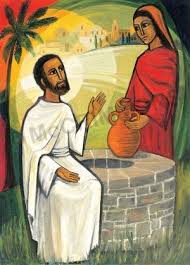
       In the gospel of John, again we see thirst.  Jesus and his disciples have been traveling and just entered Sychar, which unfriendly, Samaritan territory. – Samaritans and Jews had centuries of bad blood between them– so there was no welcome party here for the famous rabbi and his disciples.  Jesus was tired from the journey and he was thirsty.  A Samaritan woman happens to come at noon to the well, and Jesus initiates a conversation with her.  He asks her for water. This basic request begins the longest conversation Jesus has with anyone in the gospels. This is a conversation around water, thirst, theology and priorities in life.  All this takes place with a woman with three strikes against her: her gender (no respectable Jew would publicly address a woman); her ethnicity and culture (no respectable Jew would talk to a Samaritan); and her questionable history – the text says she’s had five husbands—and currently living with a fellow without the benefits of marriage. Honestly, we don’t know what’s happened to this woman – it could be she was repeatedly abused; it could be she’s made bad choices and has no clear, good future ahead.  What we do know is that she was ostracized by her village and she was ostracized by the disciples. We also know  that Jesus does not judge her or condemn her. He treats her like an intelligent, worthy human being. Ancient church legend names this woman Photene – meaning the enlightened one -- who engages Jesus in a thoughtful, direct, lively manner. Photene ends up becoming the first missionary to Samaria and she is even considered to be the first disciple to proclaim the good news of Jesus Christ. Her intelligence and wit are evident in her comments to Jesus as the conversation turns theological and soon into a testimony. See the how Jesus engages her gently and compassionately; and moves her from an ordinary request for water, “give me a drink,” to giving her the gift of Living Water:  First she says:

“I am surprised that you ask me for a drink, since you are a Jewish man and I am a Samaritan woman”
She responds to Jesus’s proclamation: “Sir, where will you get this living water? The well is very deep, and you have nothing to get water with

She diligently pursues her request: Sir, give me this water so I will never be thirsty again and will not have to come back here to get more water.”

When Jesus points out she has had five husbands – stating what is probably the pain and humiliation of her life, what has keep her down and out. she responds: Sir, I can see that you are a prophet;

Addressing her pain opens her to confesses her faith: “I know that the Messiah is coming.” (Messiah is the One called Christ.) “When the Messiah comes, he will explain everything to us.”

She ends by confesses faith in Jesus: Then to the other villagers: Come and see a man who told me everything I ever did. Do you think he might be the Christ?” 

        Photene came to the well to draw water and left with living water which she generously shared with others in her village. Like Jesus, like the Israelites, like Photene, we become thirsty. We know the symptoms of dehydration: dry mouth, nausea, lightheadedness, weakness, heart palpitations. It is said up the 75% of Americans are chronically dehydrated.  We don’t drink enough water to function at our best. I would hazard a guess that about the same percentage of people are spiritually dehydrated.  What do you think? 

    Just as we forget that our physical body is predominately water and cannot survive long without replenishing that water, so too we forget that we are made of spirit, a spirit that thirsts. A spirit we need to hydrate on a daily basis.  .  Our texts asks us: are we dehydrated today, both in body and spirit?  What signs of spiritual dehydration do we experience, right now? What are signs of spiritual dehydration?  Impatience, irritability, quarreling, gossip, stinginess, bitterness, greed, intolerance?  What symptoms are we experiencing today?

If we don’t take a Sabbath, we become spiritually dehydrated.  If we don’t have a prayer life, we become spiritually dehydrated. If we don’t immerse ourselves in the scriptures, we become spiritually dehydrated.  If we do not practice love, justice, mercy and forgiveness on an ongoing basis we become spiritually dehydrated.  Bottom line, if we don’t have a relationship with Jesus – we are spiritually dehydrated.
Jesus has a different vision for us – he wants to give us living water that will transform us – make us wholly hydrated spiritual persons.  People that can go through the wilderness places, the challenges, of our lives and thrive.  People who can take the steps to be free of whatever enslaves them.  People who do not flee from the uncomfortable territory the Lord leads us through.  People who can engage others unlike themselves -- with respect, with care and with love.  People willing to listen, to change, to share, to help and care. That’s who we are called to be. Spiritually hydrated people – through Jesus, the thirst quencher.

        God’s living water is love, through Jesus Christ we can see and taste.  God’s greatest desire is to love and be loved freely in turn by us.  It is of no surprise to us that among Jesus’ final words on the cross, he says, “I thirst” (John 19:28).   Of course, Jesus may have been physically thirsty.  The greater thirst, however, is the thirst Jesus has for us – to love us, forgive us, guide us to all righteousness – most of all to be connected to us and us to each other by love.  Jesus, the living water, thirsts.  We become thirst quenchers for Jesus.

Our journey through Lent is leads us into a spiritual wilderness – a sojourn to a place that pushes us out of our comfort zone.  Lent is a call to go to the well.  Our experience during these weeks as we journey with Jesus toward the cross awakes our thirst.  What do we thirst for? To be more loving? To be more patient?  To serve more? To be more giving?  To stop fighting so much? To have more faith?  What do we thirst for?  It is God’s desire to give us these things and so much more: as the prophet Isaiah affirms: “The LORD will guide you continually, giving you water when you are dry and restoring your strength. (Isa. 58:11)”

      There is more. God places in us the desire to be the thirst quenchers in the world – not doubt to make clean water available to all. But to bring the spiritual water the world needs – to connect – to care – to love – to share the good news of Jesus Christ, who is Living Water.  In a world where we are surround by wilderness of sin, brokenness, injustice and hatred; in a world filled with stagnant water that brings all sorts of sickness and malaise to people -- we are called to make of ourselves and our church an oasis – that place in the desert where water is found. Because we thirst.

The world thirsts.  T

he world is full of Joey Moras, people thrown overboard by life, people treading to stay afloat, people with parched souls, brains pounding, begging for water, living water of Jesus.  Who fills like Joey Mora today, adrift in ocean of life, lost, struggling to survive?  Today, come to living waters.  Today, drink deeply.  Drink until you are full. Come to Jesus, the thirst quencher,” For as the prophet Isaiah promises us: “With joy you will draw water from the wells of salvation. (Isaiah 12;3), and Jesus assures us “Let anyone who is thirsty come to me and drink… and rivers of living water will flow from within” (John 7:37-39). Let those living waters flow, in us, through us, around us, and so may the deep thirst of the world be satiated, through Jesus,  thirst quencher.  Amen.
 
 
https://www.bankmycell.com/blog/how-many-phones-are-in-the-world
https://www.unicefusa.org/stories/saving-lives-one-toilet-time#:~:text=Around%2060%20percent%20of%20the,t%20safely%20manage%20human%20waste.
https://www.google.com/ https://www.ncbi.nlm.nih.gov/books/NBK555956/search?q=massah+and+meribah+meaning&rlz=


0 Comments

Lent 2: Born Again

3/8/2023

0 Comments

 
Picture

Genesis 12:1-4a; John 3: 1-17

 
Who here is familiar with the saying, “you can’t teach an old dog new tricks?” Well, I can honestly say, in some instances I’m a case in point.   If I hit the wrong button on the TV/cable remote, I’m out of luck unless one of my kids are around to set it right.   I can’t do dropbox or copy files into the i-cloud unless Forrest is there to coach me on.  Forget about if a virus has infected my computer, something funky happens with email or on occasion the screen goes blank.  I’m stuck until a someone younger can press a few keys to make it all right again.

It's all about handling change. Times marches on. Some of us can keep up with it, most of us struggle to embrace the brave new world.  As the Greek philosopher Heraclitus put it, “the only constant thing in this world is change.”

The scriptures speak to us about embracing change, particularly change that comes as a challenge to those of us set in our ways.  It’s about teaching old dog new tricks.  We can safely say the Bible is a book about change. Of lives being upended. Of new insights gained. Cultures adapting. Tensions flaring between the old way of doing things and the new.  The truths of the bible may be eternal, but every new generation must encounter the challenges of the word of God and how to live out the promises of God, interpret and understand the word of God as it speaks to every age.

Our lessons today are a case in point.  We encounter three old people Abram, his wife Sarai, and the Pharisee Nicodemus.  Each of them is established in their ways.  Abram and Sarai are 75 years old, retired from the hard labors of life.  They have earned their rocking chairs on the porch.  Their routines are predictable.  They are looked up to and revered as the elders of the clan.  They can take it easy; life has settled and is predictable for them.  Then out of the blue, God speaks without any explanation or warning:” “Leave your country, your relatives, and your father’s family, and go to the land I will show you.”  Leaving home is hard enough when your young, strong, and full of dreams and energy.  Packing up and saying goodbye is always hard no matter what your age is.  Add to that having to travel hundreds of miles away, learning new customs and new languages?  To not even know the destination ahead of time?  That would be more appropriate for someone on the cusp of adulthood.  God thinks elsewise.  Here, God sends old people to do a young person’s task. God says, I’m not finished with you yet. Old dogs learning new tricks.

 In our gospel lesson, we are introduced to Nicodemus, an esteemed elder and prominent Pharisee. The title Pharisee means the ‘separated one.”  The Pharisees separated themselves from all things considered foreign, all things considered unholy or unclean in order to keep scrupulously every detail of the Jewish law.  The Pharisees believed that only by observing the law strictly could one be deemed righteous, saved, right with God. Only by strict observance of the law could one please God and be justified before God.

What is very important for to know is that they not only strove to the written law, the Torah, but also the oral law which was believed hand down at the same time as the written commandments. The oral law were the explanations and commentary on the law of Moses given to help people understand and obey the commandments perfectly. It was widely believed that two torahs were handed down on Mt. Sinai - the written torah “The Law of Moses” and the oral torah.  The oral torah was also passed down from teacher to disciple from parent to child that enabled the observer to obey the law in its truest meaning.

The  oral torah, which often was stricter or at times even changed the meaning of the written torah often incurred  the anger of Jesus. Take, for example, Matthew 15:36:  Jesusanswered them, “And why do you break the commandment of God for the sake of your tradition? For God said, Honor your faith and mother, or whoever speaks ill of father or mother must surely die. But you say, whoever tells father or mother whatever support you might have had from me is given to God then that person need not honor the father. So for the sake of your tradition, you make void the word of God.”  Or listen to Jesus in Mark 7:3-4: …Now in holding to the tradition of the elders, the Pharisees and all the Jews do not eat until they wash their hands ceremonially. 4And on returning from the market, they do not eat unless they wash. And there are many other traditions for them to observe, including the washing of cups, pitchers, kettles, and couches for dining.”
 
The oral Torah had laws about daily living with the goal to keep the observant Jew separate from non-observers, sinners and foreigners.  Very often people couldn’t keep the oral torah, and they were deemed unclean. Jesus constantly broke the rules of the oral law, earning him the ire of the Pharisees and elders of the law.

So, the esteemed Nicodemus was a strict keeper of the oral and written laws. No doubt he believed and taught that such strict observance made one right with God, justified by God, pleased in the sight of God.  He followed these beliefs all his life. But now Nicodemus sees something in Jesus.  Nicodemus says, Teacher, we know you are a teacher sent from God, because no one can do the miracles you do unless God is with him.”  Jesus answers dismissing Nicodemus’ honorifics, “I tell you the truth, unless you are born again, you cannot be in God’s kingdom.” Born again, can also mean born from above. 
The chapter goes on to depict this prominent and distinguished elder struggling to understand what Jesus was saying.  For Nicodemus and other Pharisees, God’s kingdom was reserved for people who scrupulously kept the law of Moses as well as the oral torah.  Jesus sweeps away centuries of belief by declaring, “I tell you the truth, unless you are born from water and the Spirit, you cannot enter God’s kingdom. …  Don’t be surprised when I tell you, ‘You must all be born again.

With one sentence Jesus cancels decades of Nicodemus’ learning. He blots out centuries of teaching by the Pharisees.   Nicodemus, used to sparing with the best of teachers, struggles to understand Jesus’ “How can this be?” “how can a man be born when he is old? Can he enter a second time into his mother’s womb and be born?” he fumbles. He’s an old dog struggling to learn new tricks.

Jesus fundamental teaching is this: bottom line: followings hundreds of laws meticulously doesn’t make you right with God.  The only right that sets us right is  faith in Jesus Christ. Being born again means faith in Jesus which brings the Holy Spirit in our hearts. That alone enables us to enter the kingdom of heaven.

        Jesus describes nothing less than being spiritually transformed and remade by God’s grace.   Through Jesus our hearts are regenerated and we begin to follow the law of love. Through Jesus we are able to follow the paths of righteousness instead of rigid rules and regulations that keep us separate and apart.  Being born again or born from above seeks instead to unite us, to bring us together with others, not keep us apart.
        Being born again, born from above, can happen when we are very young, it happens when we are very old. It happens whenever we set aside human presumptions and judgments and seek to instead seek Jesus only, knowing there is nothing we can humanly do to earn the love and forgiveness of God. It’s there for the asking. We don’t have to follow rules to gain God’s goodness or to please God. We don’t gain righteousness through self-efforts. We gain righteousness solely through accepting Jesus as our Lord and Savior, who in turn enables us to do good works in keeping with the kingdom of God.

        No matter our age, many of us are stuck in our ways. We’ve kept all the rules, did all the right things we were taught, but still feel empty inside.  We still feel like we don’t measure up.  We feel there’s nothing more we can do. Or worse, some of us feel self-satisfied. Some of us think we’re right with God without having surrendered our heart to Jesus. Jesus is clear, as he was with Nicodemus: Nothing we do, nothing we achieve, nothing we gain, nothing we buy, nothing we give away or take, can earn us love. We need to do only one thing this Lent, to open our hearts to the transforming spirit of God, the powerful mercy of God and be born again. 

Accept Jesus as Lord and Savior today. Free your hearts  Cast aside the old: learn something new: Be born again. No matter how many times you have confessed this, confess it again.  Let us pray:
​
Lord, we’ve tried it all, but yet we have failed to achieve righteousness. We cling tenaciously to our pride.  Open our hearts today. Touch whoever is present here today and needs to know you exist that you love us, that you forgive us.  Free us from sin and all pre-conceived notions of the truth that we hold onto. Give each of us the grace to turn to you, accept you as Lord and Savior, and be born again through the power of the holy spirit.  Thank you, Lord Jesus, for doing this mighty work in our hearts today. amen

0 Comments

Lent 1: Confronting Temptation and Evil

3/1/2023

0 Comments

 
Picture


Matthew 4:1-11


​When I was a graduate student at Fordham University, I had the mad idea that I should take an intensive course in Latin to aid me in my theological studies.  My professor was none other than Fr. Thomas Bermingham, a lively and engaging Jesuit priest.  One of his claims to fame, besides being an outstanding classics scholar, was he was the mentor of William Petty Blatty the author of the best-selling book, The Exorcist.  Fr. Bermingham was also a technical advisor to the 1973 movie based on the book.  Has anyone here seen the Exorcist?  It reportedly sent people screaming out of the theatres, provoked nightmares, vomiting and insomnia; it was controversial for some of the blasphemous scenes contained in the movie. Fr. Bermingham didn’t speak at great length about the movie, but he did speak about the devil.  The main intent of Evil, to paraphrase Fr. Bermingham, is not to frighten or spook people out. The Devil goes for the jugular: to destroy relationships and break human connection in all its forms.  Evil seek nothing else but to mare that image of God imprinted upon the human soul.
​
As we begin our journey of Lent, it is important for us at the get-go to understand temptation and the presence of Evil in our lives and all around us.  We live in an age where people have various opinions about evil.  We see Evil’s handiwork around us in conflicts, and wars, in ruptures in our families fighting in our churches, and even in the discord in our very souls. In this modern era, is evil just an impersonal, invisible force operating around us like gravity? Is it the sad by-product of human sin? Or is there an intelligent, cunning spiritual being that deliberately seeks to create havoc and devastation wherever it goes? That delights in our suffering, seeking to obliterate the very image of God etched within us?  Is it a combination of all these things?

However we slice or dice it, evil is a part of this world.  Explain it scientifically, psychologically, metaphorically, or scripturally, the bottom line is that evil exists.  Temptation exists.  Every day we face choices for good or evil, bad or good.  Right or wrong. Every day we have a devil on one shoulder, an angel on the other trying to influence our actions.  In this season of Lent, we are asked to become more conscious and alert to temptation and the presence of evil influence in our lives.   Call him Satan, the Devil, the Evil One,  Lucifer, the Prince of Darkness, Beelzebub, (Revelation 9:11),  the Father of Lies(John 8:44) and Belial (2 Corinthians 6:15) the tempter, the adversary, the ancient serpent, Abaddon (destruction), Apollyon) (destroyer) (Revelation 9:11); the god of this age(2 Corinthians 4:4),  prince of this world (John 12:31). Take your pick. Picture him in the form of a snake, a sea monster, a roaring lion (1Peter 5:8) a dragon (Revelation 12:9), or a red-hued, human-like creature with a sinister smile, horns and a tail, carrying a pitchfork. Demonologists, those folks who study the ways of demons and evil, tell us that Evil doesn’t desire to look scary.  The more respectable and normal the better.  The charismatic pastor. The successful businessperson. The outstanding citizen.  Whatever form Evil takes the results are the same. To destroy human relationships, to sever our connection to God by leading us into sin and rebellion; to break with each other, to crush out goodness within us. The devil seeks to reign as a counterfeit God, ensnaring us, enchaining us, stirring up torment and discord especially under the guise of righteousness.   

Our stories today from Genesis the temptation of Eve, and from Matthew which describe for us the temptation of Jesus, paint a picture of the Evil One’s handiwork.  Our scriptures today give us insight into what the Devil is after, how he goes about doing it, and what we can do to guard ourselves against his attacks.

In Genesis note that the devil, disguised as a crafty serpent, begins his work by asking Eve an innocent, but devious question: “Did God say you shall not eat from any tree in the garden?”  God actually says, “you may eat of every tree in the garden, but of the tree of knowledge of good and evil you shall not eat, for the day you eat of it you shall die.”  So the devil begins his temptation by twisting the truth, inserting doubt, trying to undermine God’s authority and goodness.  Eve could have corrected the devil and ended the temptation if she quoted God’s words, which Jesus does.  Moreover, she knew how serious God’s command was because she adds “neither shall you touch it.”  Eve knows God has place a boundary they are not to cross and highlights the lethality of the action by even touching the fruit let alone eating it.  To this the devil counters, “You will not die, for God knows that when you eat of it your eyes will be opened, and you will be like god, knowing good and evil.”  Bottom line, Satan lies. He contradicts God’s command, plants a seed of rebellion that Eve should be like God, her eyes opened, knowing good and evil.  Look what happens. Eve suddenly sees the fruit as good instead of a danger.  She sees the fruit as a delight to the eyes, no longer something she knows not to even touch.  Worse yet, she sees the fruit as a desire to make one wise.  All these thoughts the serpent manages to stir up in Eve’s mind, with just with a simple lie.  The lie compounds, creating images in Eve’s head so that she ultimately believes something that is wrong is now right.  By this act of rebellion, doing the one thing God asked them not to do, Eve then Adam know evil intimately, and they spiritually die.

There are a couple of things we should note. The devil is clever. He approaches Eve when she is by herself, just like he approaches Jesus alone in the wilderness. It’s the action of predators everywhere:  separate an individual from the flock, where there is strength and protection and attack them where they are vulnerable.  From this vantage point the devil plants the snare with subtle, seemingly innocent questions, in order to implant ideas and thoughts that are contrary to the will of God. “Did God say?”  “If you are the son of God…” The Devil succeeds by carefully twisting the truth, very carefully appealing to human pride and weakness, perverting the good, giving a distorted angle to the situation that opens the door to temptation. 

The devil is planting a thought and a desire for Eve to be wise.  Instead of going to God to ask for wisdom directly or tell him of the conversation with the serpent, she takes matters in her own hands. She relies on her own limited insight and strength. She takes on the role of judge that belongs to God alone. Likewise, the devil tempts Jesus to use his powers to appease his hunger by supernatural means.  The devil tempts Jesus to test and be saved by supernatural powers by throwing himself off a cliff. The devil tempts Jesus to enjoy worldly dominion by just once bowing before him and worshipping him. In each instance however, Jesus doesn’t rely on himself to confront temptation. He resorts to God’s word.

        Doesn’t the devil tempt us in the same way? The devil knows our faults and foibles better than we do. Maybe we don’t want to be wise like Eve did, but maybe we want approval and acceptance.  Maybe we want to be loved.  Maybe we want power and control.  Maybe like Jesus we are hungry for something. The devil says, why wait?  Maybe like Jesus we have certain gifts from God.  The devil says why not use them for our own benefit?  Like Jesus we all have an amazing destiny and purpose.  The devil says I can help you get there faster. I can give you all the power and fame you deserve or ever could ever want.  The devil we should note in his temptation of Jesus, can quote scripture with the best of us.  So let us not be fooled, but be prepared.

Where Eve fails, Jesus succeeds.  Jesus feels all the desires the devil is stirring up, but Jesus doesn’t let it ruminate. He doesn’t engage the images of longing.  Jesus instead uses scripture to counter the attacks.  If only Eve had stayed focused on God’s word and obeyed it, she might’ve avoided a catastrophe.
This is the big takeaway from our stories:  when we are tempted let’s use scripture! Remember what the book of James (4:7) advises: “Submit yourselves, then, to God. Resist the devil, and he will flee from you.” 1 Peter (5:8) reminds us: “Be alert and of sober mind. Your enemy the devil prowls around like a roaring lion looking for someone to devour.” 

There is a scripture for every temptation. In this Lenten season, take the time to name faults, to name weaknesses, to name sinful habits and confess them to God.  Let us use our time to do personal bible studies, to research scriptures that respond to our needs and concerns. Find an accountability partner with whom you trust and pray whenever you feel tempted or brought low.  Jesus knows temptation is part and parcel of life.  For this reason, Jesus adds to the prayer he taught us to say:  “Lead us not into temptation. Deliver us from evil.”  In Jesus we have a model of someone tempted in every way, but did not sin (Hebrews 4:15)  He knows our weaknesses and is ready, at the drop of a hat, to intercede on our behalf.

        Remember this: Evil wants to make us feel alone, Evil wants to make us feel worthless and washed up. Evil wants to inflame anger and pride, to eat away at our souls, to break our loving connections to others, to destroy the church, to reduce the world to tears and rubble.  And if he can’t destroy you he will seek to disarm you with feeling miserable and weak all the time.  Temptation and evil are real things in our lives, that touch us every day.  But so is the love, mercy, forgiveness and power of God. The joy of the Lord in our strength (Nehemiah 8:10).  God is love and the foundation of our ties to one another.  God created us for love to love, to be in love.  So, this Lent let us help each other to defeat evil whenever it rears its ugly head. 

Let us overcome temptation. Let us cling to Jesus, cling to each other, cling to the Scriptures.  Let not the cords of love that connect us be broken. Together we are better.  Together we are strong. The saints of old remind us to laugh in the face of the devil, jeer and flaunt him. In the face of temptation and evil we are called to hold fast good cheer: for remember scripture reassures us: “Greater is he in you than he who is in the world (1 John 4:4).”  Amen.


https://www.franciscanmedia.org/ask-a-franciscan/finding-satans-story-in-the-bible/
https://www.washingtonpost.com/wp-srv/style/longterm/books/chap1/deathof.htm
https://www.history.com/topics/folklore/history-of-the-devil
https://answersingenesis.org/angels-and-demons/satan/what-about-satan-and-the-origin-of-evil/
https://www.thegospelcoalition.org/essay/demon-possession/
https://en.wikipedia.org/wiki/Thomas_Bermingham_(priest)

0 Comments

    Author

    Moirajo is a minister, social worker, wife, mother, writer and animal lover. That's just for starters. Join the story, there's so much we can share together! 

    Archives

    April 2023
    March 2023
    February 2023
    January 2023
    December 2022
    November 2022
    October 2022
    September 2022
    August 2022
    July 2022
    May 2022
    April 2022
    March 2022
    February 2022
    January 2022
    November 2021
    August 2021
    June 2021
    May 2021
    March 2021
    February 2021
    January 2021
    November 2020
    October 2020
    September 2020
    August 2020
    July 2020
    June 2020
    May 2020
    April 2020
    March 2020
    February 2020
    January 2020
    December 2019
    November 2019
    October 2019
    September 2019
    August 2019
    July 2019
    June 2019
    May 2019
    April 2019
    March 2019
    February 2019
    January 2019
    December 2018
    November 2018
    October 2018
    September 2018
    August 2018
    July 2018
    May 2018
    April 2018
    March 2018
    February 2018
    January 2018
    December 2017
    November 2017
    October 2017
    September 2017
    August 2017
    July 2017
    June 2017
    May 2017
    April 2017
    March 2017
    February 2017
    January 2017
    December 2016
    November 2016
    October 2016
    September 2016
    August 2016
    June 2016
    May 2016
    April 2016
    March 2016
    February 2016
    January 2016
    December 2015
    November 2015
    October 2015
    August 2015

    Categories

    All

    RSS Feed

© Moira Ahearne 2017. ALL RIGHTS RESERVED.
Photo from psd